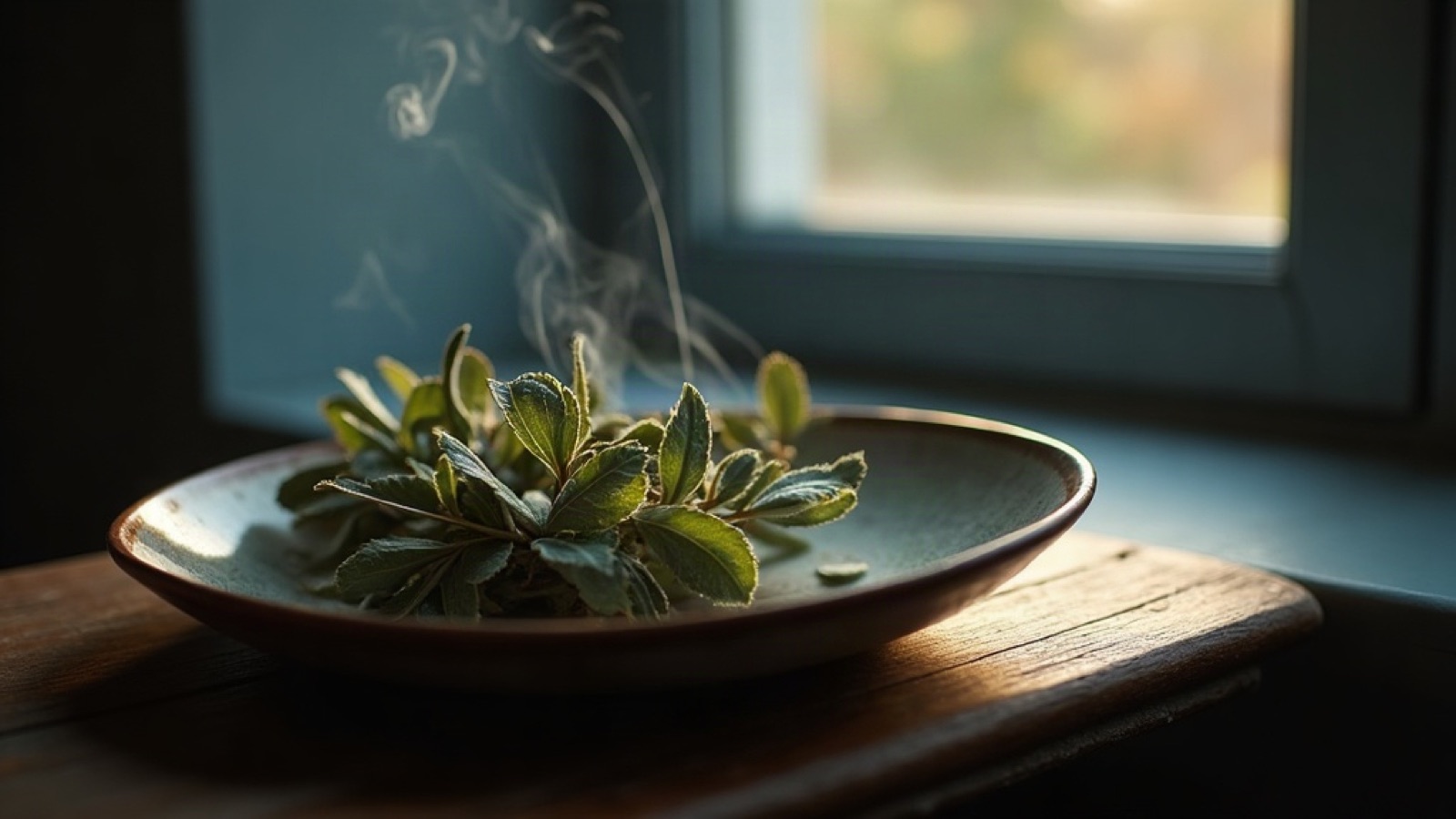
A sage cleansing ritual is simple. Open a window, light the tip of a dried sage bundle, let it smoulder rather than flame, and walk the smoke slowly through the room while you hold one clear intention for the space. Then put the bundle out completely in a fireproof dish. The whole thing takes about ten minutes. What it does is mark a reset: a deliberate line between how a room has felt and how you mean to live in it from now on. It is not a way to disinfect a room, and it does not need to be one to be worth doing.
What smudging is, and what it is for
Burning a plant and moving through its smoke is an old way of setting a moment apart. The smoke is visible and it moves, which turns an intention into something you can watch happen.
In a home, that is the real job. People reach for a cleansing ritual when they move into a new place, after a hard stretch, after a row that still seems to hang in the kitchen, or before they sit down to set clear intentions for a new season. The room is the same room afterwards. What changes is that you walked every corner of it on purpose and decided what it is for.
You will read that sage smoke cleans the air or kills germs. The paper usually behind that idea, a 2007 study from India, burned wood with a traditional mix of herbs called havan samagri, not a sage bundle, in a closed room, and counted bacteria in the air. It measured nobody's health. Leave the germ claims alone. The crystals guide makes the same point about cleansing a stone: the value is in marking a boundary, not in topping up an invisible charge.
Where the practice comes from, and how to borrow it with respect
"Smudging" is the English name for a tradition in many Indigenous cultures of North America in which sacred plants, sage among them, are burned in ceremony. Teachings and protocols vary from one community and region to the next. They are passed on by people with the standing to pass them on, and this page does not try to teach them.
That history is not distant. For generations, the United States government restricted Indigenous ceremonial life. An 1883 Interior Department code made the Sun Dance and similar ceremonies "Indian offenses", punished by withholding a person's food rations or, for repeat offences, up to thirty days in the agency prison. It was not until 1978 that federal law set a policy of protecting Native Americans' right to practise their traditional religions, including ceremonies and the use of sacred objects. So when a bundle of sage turns up in a gift shop as a "smudge kit", it is reasonable that some Indigenous people find that uncomfortable.
None of that means you cannot burn herbs in your own home. It means being honest about what you are doing, which is a personal cleansing ritual. Calling it a cleansing rather than a smudge is one honest way to say so. Do not describe it as a tradition nobody taught you, do not charge anyone to perform it, and if you want the real ceremony, learn it from its keepers when they choose to share it. Respect extends to the plant, too.
Choosing what to burn: white sage and its alternatives
White sage. White sage grows wild in only one part of the world: southern California and Baja California, from Santa Barbara County south. Demand for smudge bundles has driven large-scale poaching of the plant from wild land. The California Native Plant Society says there are very few commercial growers, so the vast majority of white sage products are wild-harvested, and it advises buyers to know their source and avoid wild-harvested sage. If you want white sage, grow your own, or buy only from a grower who can tell you where it was planted. A cheap bundle with no origin on the label is the one to skip.
Garden sage. The ordinary kitchen herb is easy to grow in a pot, dries well and burns steadily when bundled tightly. Tie a handful of stems firmly with cotton string and hang them somewhere dry until the leaves are crisp.
Rosemary. Bundles and smoulders much like sage, with a sharper, piney smell.
Cedar. A pleasant, woody smoke. Cedar is also one of the four sacred medicines in Anishinaabe teachings, alongside tobacco, sage and sweetgrass, so the same care about naming and sourcing applies.
Incense. A stick or cone is the easiest option for a small flat.
No smoke at all. The smoke is a vehicle. If anyone in the house should not be around it, keep the walk and the intention and drop the fire: open every window, ring a bell or clap in each corner, sweep toward the front door. The post on raising positive vibrations in your home collects more of these gentler ways to change how a space feels.
How to smudge with sage, step by step
- Tidy first. Clear the surfaces so the reset has something to land on.
- Set your intention. One sentence, in plain words. "This is a calm place to work." "We start again here." Say it out loud once before you begin.
- Open a window or door. The smoke needs somewhere to go.
- Light the bundle. Hold the tip in a flame for a few seconds until it catches, then gently blow the flame out so the leaves glow and smoke. Hold a fireproof dish underneath from here on, because embers drop.
- Walk the room. Start at the entrance and move slowly along the walls, into corners, around doorways and windows. A thin trail of smoke is enough; you are not trying to fill the room. Repeat your intention quietly in each corner, and keep the route the same each time; repetition is what turns an action into a ritual.
- Put it out properly. Press the lit end into sand, soil or the bottom of the dish and turn it until nothing glows. A bundle left to "go out on its own" can smoulder for a long time. Check it again a few minutes later, and store it only once it is cold.
- Close the ritual. When the smoke has cleared, shut the window, stand in the middle of the room and take a few slow breaths. If you want a simple pattern, the breathwork for beginners guide has several. Notice how the room feels to you now.
Safety: fire, smoke and the people and pets you live with
- Never leave a lit bundle unattended, even for a moment. Carry the dish with you and keep it away from curtains, bedding and paper.
- Expect the smoke alarm to notice. Keep the smoke light and the window open. Never disable an alarm to get through the ritual.
- Go easy in small rooms. Smoke builds up fast in a closed bedroom or bathroom. A few passes with the door and window open is plenty.
- Ask the people you live with. Anyone with breathing problems, anyone pregnant, and babies or young children should not be in a smoky room. Do the ritual while they are out and air the space well before they come back, or choose the smokeless version.
- Move pets out first. Let dogs and cats leave the room rather than shutting them in with the smoke. A bird's breathing system takes up gases from the air unusually efficiently, and veterinary guidance for bird owners warns that their airways are very sensitive to household fumes such as perfumes and sprays. If you keep birds, use the smokeless version.
What burning sage smells like, and how to get rid of the smell
White sage smoke smells herbal and resinous, sharp at first and slightly sweet as it lingers. Some people find it close to the smell of cannabis, which is worth knowing if you share walls with neighbours. Garden sage is more savoury, closer to a kitchen herb singed in a hot pan. Rosemary is piney, and cedar smells like a wood fire.
The smell settles into soft things more than hard ones. To clear it:
- Open windows on opposite sides of the room for a cross-breeze, and point a fan outward.
- Wash cushion covers, throws and curtains if the smell stays in them.
- Sprinkle bicarbonate of soda over rugs and upholstery, leave it for a few hours, then vacuum.
- Next time, use less. Most of the lingering smell comes from burning far more than the ritual needs.
How often to do it, and how to tell whether it is doing anything for you
There is no correct schedule. It works best tied to moments that mean something: moving in, the start of a season, after a difficult visit, before you begin a big piece of work. A weekly practice is fine while it stays deliberate; once it becomes background, do it less often.
Be honest about what to look for. Do not look for a change in the air. What might change is you. Keep a single line in a notebook after each cleansing: how the room felt before, how it feels now, what you intend for it. Read the lines back after a month. If you find you use the space differently, sitting down to work there without delay, or leaving an argument at the door instead of carrying it in, the ritual is doing its job. If nothing has shifted, change the ritual or let it go.
A cleansing marks a fresh start. Keeping a space and yourself steady after that is a different skill; the post on protecting yourself from negative energies gathers ideas on that side of it, and these spirit hacks for cleansing your energy turn the same idea inward, from the room to the person standing in it.